Storm damaged tree on Martha's Vineyard? What to do in the first 48 hours, what insurance usually covers, and how to prep trees for the next nor'easter.
On this page
- What Should You Do First With a Storm Damaged Tree?
- The First 48 Hours: What Is Safe and What Isn’t
- Can a Storm Damaged Tree on Martha’s Vineyard Be Saved?
- Does Homeowners Insurance Cover Fallen Trees?
- Off-Island Owners: How a Storm Gets Handled Without You
- How Do You Prepare Trees for the Next Nor’easter?
- What Our Crew Does on a Storm Call
- Frequently Asked Questions
TL;DR: After a storm, stay out from under damaged trees, call Eversource or 911 for anything touching a wire, and photograph the damage before anything is moved. Then have an arborist decide what can be saved. Before the next nor’easter, clear deadwood, cable weak unions, thin heavy crowns and check pitch pines after wet weeks. Off-island owners can have all of it handled through their caretaker.
A storm damaged tree on Martha’s Vineyard is rarely a single problem. It’s a split stem over the porch, a limb hung up forty feet above the driveway, and a pine that now leans a little more than it did on Friday. What you do in the first two days decides whether this stays a tree problem or becomes a roof and insurance problem too.
The island has had two reminders this year. In late February, a blizzard left more than 10,000 customers without power, about 56 percent of Eversource’s island customers, with more than 4,000 out in Oak Bluffs and in Edgartown alone. On September 25, a nor’easter arrived with gusts forecast as high as 65 mph, up to two inches of rain and every ferry canceled.
This guide has two parts: the first 48 hours after a storm, then the October to March prep list our crew works through before winter.
What Should You Do First With a Storm Damaged Tree?
Stay clear of the tree and anything under it, since broken limbs can still shift. Call Eversource or 911 if a limb or trunk touches a wire. Then photograph the damage from several angles before anything is moved, and call an arborist to assess what is left standing.
That order matters. The ISA’s guide to storm-related tree damage tells owners to stay away from damaged trees and to call emergency services, the utility or an arborist rather than tackling the work themselves. Eversource is blunt about wires: stay clear of fallen limbs, electrical wires and anything they’re touching, and call 911 or the utility.
Treat every wire as live, because a limb resting on the service line to the house can look harmless and still carry current.
The First 48 Hours: What Is Safe and What Isn’t
Most storm injuries around trees happen after the wind has stopped. People go out to tidy up, and the tree isn’t finished moving.
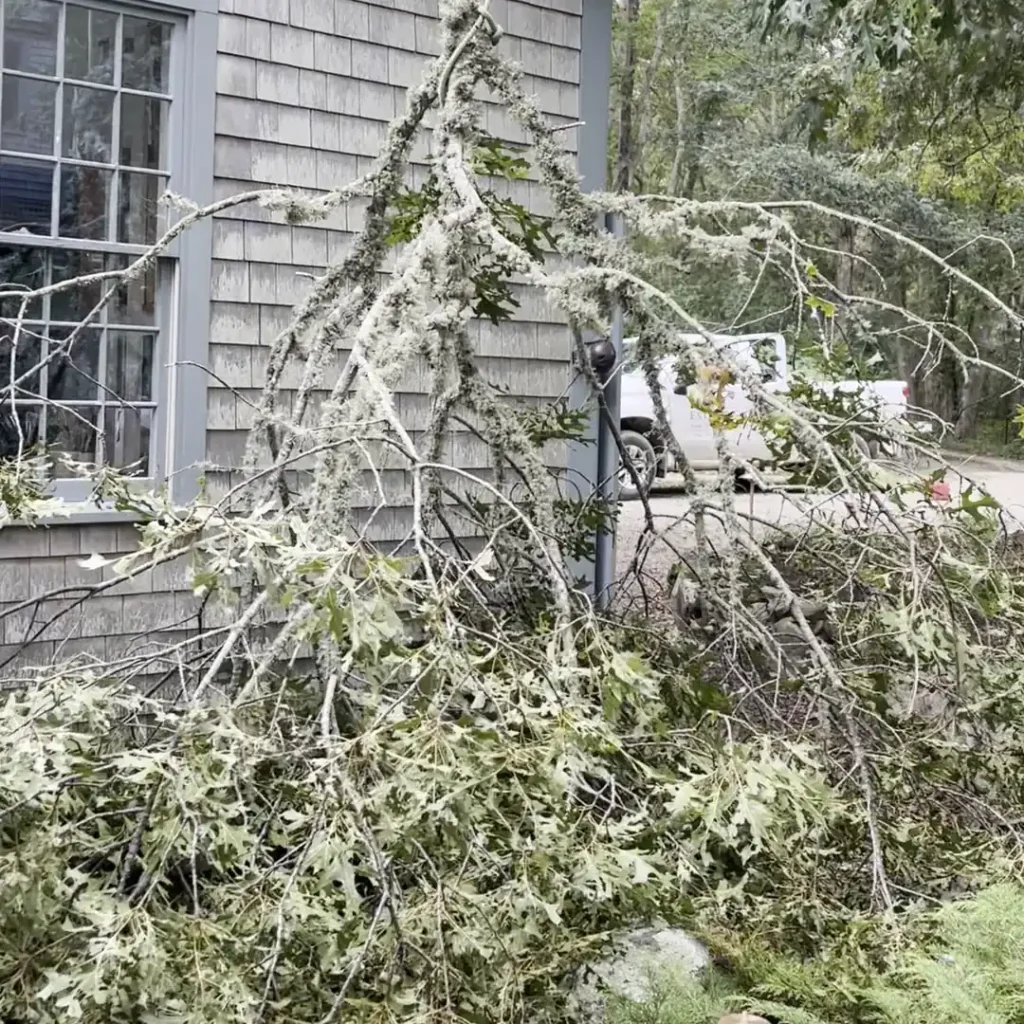
Leave alone: hung-up limbs, called hangers, that are caught in the crown. They can drop days later with no warning. The same goes for split stems, any tree leaning against another tree or the house, and trunks that are bent under tension. Cutting wood under tension is how chainsaw work turns dangerous in a second.
Safe to do: pick up small branches lying loose on the lawn, away from wires. Move cars out of the fall zone of any leaning tree. Keep children and dogs out of the area until someone qualified has looked at it.
Write it down: note the date, time and what happened, and take photos and video from more than one side. GEICO’s guidance on tree claims recommends exactly that, including the cause of the fall, such as high winds.
For a tree on the house or across the driveway, a rigged removal is the safe route. Our hazardous tree removal crew lowers the wood in controlled pieces with ropes, so nothing drops onto the roof a second time.
Can a Storm Damaged Tree on Martha’s Vineyard Be Saved?
Often, yes. A tree that was healthy before the storm, still has its main leader, and kept at least half of its crown has a good chance of full recovery. Split trunks, torn root plates and trees that lost most of their crown usually need to come down.
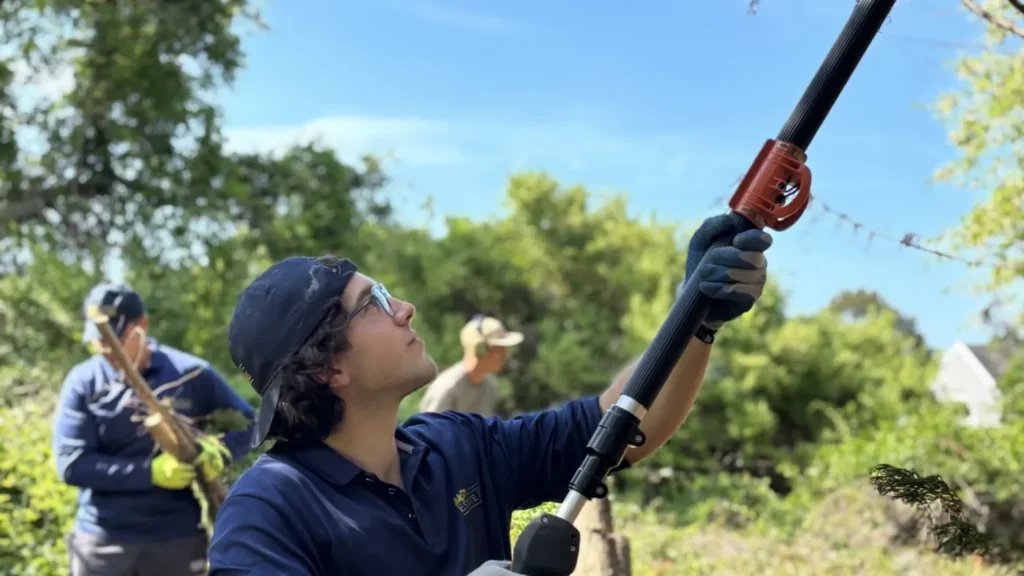
The New England chapter of the ISA puts it in three questions: was the tree basically healthy before the storm, are the major limbs still there, and is at least 50 percent of the crown intact. Mostly yes answers point to recovery.
Here is how we sort the damage we find on island properties.
| Damage you see | Usual outcome | What we do |
|---|---|---|
| A few broken branches, crown mostly intact | Recovers well | Clean pruning cuts at the branch collar |
| One large limb torn off, leaving a ragged wound | Usually saved | Trim the tear back to clean wood, re-check next season |
| Weak union starting to open, no full split | Often saved | Reduce the weight above it and add a cable |
| Main trunk split or snapped | Rarely saved | Remove in rigged sections |
| Root plate lifted, soil heaved on one side | Not saved | Remove before the next wind |
| More than half the crown gone | Rarely saved | Assess vigor, usually remove |
Pitch pine and black oak give the most trouble here. Pitch pine goes over at the root plate once rain has loosened the sandy soil. Black oak tends to split where two stems meet. For the full list of what to look for on standing trees, see our nine signs a tree is dangerous.
Does Homeowners Insurance Cover Fallen Trees?
Usually only when the tree damages a covered structure, such as the house, garage or a fence, because of a covered event like wind. A tree that falls onto open lawn without hitting anything is often the owner’s cost to remove. Every policy differs, so call your agent before work starts.
A few general points hold for most policies. According to Consumer Reports on who pays when a tree falls, a neighbor’s tree that lands on your house goes through your own insurer, not theirs. The same article says that if no structure was damaged, removal and cleanup are yours to pay.
Debris removal is often capped. GEICO notes that many policies set a limit per tree and per incident, which may not cover a large rigged removal. We can’t tell you what your policy covers, and no tree company should. What we can do is give you clear photos, a written description of the damage and an itemized estimate for your adjuster.
Off-Island Owners: How a Storm Gets Handled Without You
Plenty of storm calls we get come from Boston, New York or further away. The owner has seen a photo from the caretaker and wants to know how bad it is.
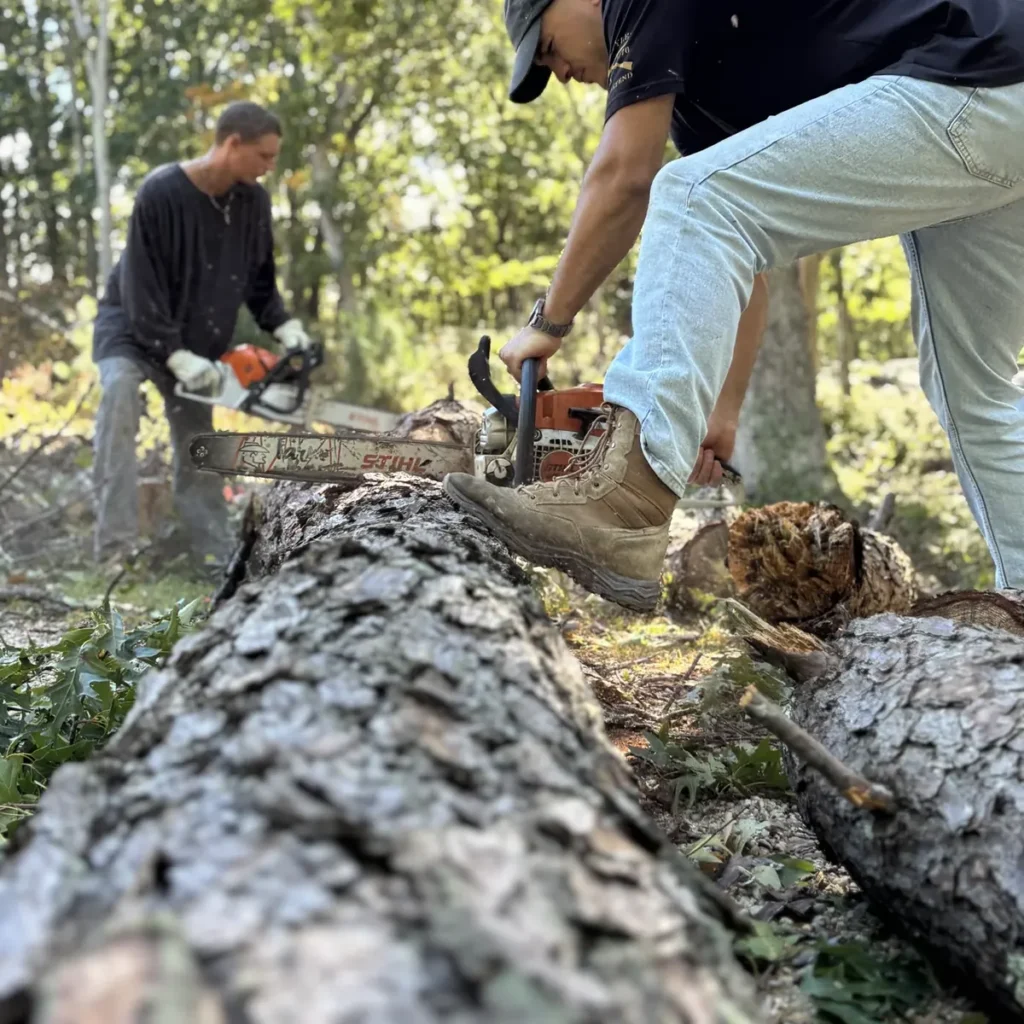
You don’t need to be here. We arrange access with your caretaker or property manager, walk the site, and send you photos, the risk as we see it, and the options. Emergency work that keeps a tree off the house goes first; everything else waits for your approval.
Exposed shoreline lots see the most damage in a northeast wind, so on the south shore and around Katama our Edgartown tree service often starts the morning after a storm with the pines that face open water.
After the tree work is done, there is usually a lawn full of leaves, twigs and flattened beds. Our sister company Estate Care handles that part with its storm and seasonal cleanups, so one call to us covers both.
How Do You Prepare Trees for the Next Nor’easter?
Remove deadwood, cable weak unions, thin dense crowns that catch wind like a sail, and check pitch pine root plates after wet weeks. October through March is the window for this work. Nor’easters are most common from September to April and hit hardest in winter.
NOAA describes nor’easters as most common between September and April and most severe in winter, with gusts that can exceed hurricane force. Hurricane season also runs to November 30, and NOAA’s 2026 Atlantic outlook still expects 8 to 14 named storms even in a below-normal year.
Our October to March prep list:
- Deadwood out. Dead limbs over roofs, decks, drives and paths are the first things to come down in wind.
- Weak unions checked. Tight V-shaped stems with bark pinched between them get a cable, a reduction, or both.
- Sail crowns thinned. Dense pines and oaks on exposed lots are thinned lightly, never topped.
- Root plates watched. After a week of rain, look at the soil around big pitch pines for cracks or lifting.
- Clearance from the house. Branches rubbing the roof or hanging over the chimney are cut back.
- Dead pines flagged. Beetle-killed pitch pine near a structure goes on the removal list before January.
Most of this is standard tree pruning and cabling work, and it costs far less than a storm removal from a roof.
What Our Crew Does on a Storm Call
Call (508) 560-6073 when a tree is on a house, across a road or blocking a drive. If wires are involved, call Eversource first; we work around lines only once the utility has made them safe.
On site, the first job is making the tree stable, not tidy. Hangers come down, loaded limbs are released in a controlled way, and anything on a roof is rigged off. Cleanup and a plan for what is left come next.
For storm prep, or for a tree that made it through but worries you, request a free estimate. One of our certified arborists will walk the property with you or your caretaker before the winter storms arrive.
Frequently Asked Questions
At what wind speed do trees fall down?
There is no single number, because a sound tree in firm soil can ride out gusts that would bring down a decayed or shallow-rooted one. On the Vineyard, most failures we see follow heavy rain that softened the sandy soil before the wind arrived.
How long does it take a tree to recover from wind damage?
Recovery is measured in growing seasons, not weeks. A well-pruned tree usually pushes new growth the following spring. We re-check storm-pruned trees after one full season to see how the wounds are closing and whether the crown is filling in.
Should I cut up a fallen tree myself?
Only small, loose branches on the ground and well away from any wire. Trunks and big limbs are often bent under tension and can spring or roll when cut. Leave those, and anything leaning on the house or another tree, to a trained crew.
Is it safe to stay in the house with a damaged tree leaning over it?
Keep everyone out of the rooms under the lean until an arborist has assessed it. If the soil around the base is cracking or the lean is getting worse, treat it as an emergency and call right away.
Will cabling stop a tree from breaking in a storm?
Cabling lowers the chance that a weak union fails, but it isn’t a guarantee. UMass urban forestry guidance on cabling says cables should be inspected every year and replaced after 7 to 10 years. We pair cabling with light weight reduction so the union carries less load.