Tree removal cost on Martha's Vineyard depends on the tree and the site. See every factor that sets the price, and how to compare two quotes line by line.
On this page
- How Much Does Tree Removal Cost on Martha’s Vineyard?
- The Factors That Set the Price
- Why Does Tree Removal Cost More on the Island?
- Stump Grinding: Included or Separate
- Why Do Dead and Storm-Damaged Trees Cost More to Remove?
- How Do You Compare Two Tree Removal Quotes?
- When Removal Isn’t the Answer
- Frequently Asked Questions
TL;DR: Tree removal cost on Martha’s Vineyard depends on the tree and the site, not a rate card. Height, trunk size, what sits underneath, whether the tree must be rigged down in pieces, driveway access, disposal and the stump all move the number. We don’t publish prices because two similar trees can need very different work. A free on-site visit gets you a written, itemized estimate.
Most people searching for tree removal cost on Martha’s Vineyard want a number. We understand that, and we still don’t publish one. The same tall pitch pine can be a half-day job in an open field in West Tisbury and a two-day rigging job over a slate roof in Edgartown.
What we can do is show you exactly what goes into the price. Once you know the factors, you can read any quote, ours or someone else’s, and see whether it covers the whole job.
This guide walks through each factor and explains why island work costs more than the mainland, with a checklist for comparing two quotes line by line.
How Much Does Tree Removal Cost on Martha’s Vineyard?
It depends on the tree and the site. A tree that can be felled in open ground costs far less than one that must be climbed and lowered in rigged pieces over a house. Access, disposal and the stump add to it, which is why a firm price needs a site visit.
Online calculators average thousands of jobs from places with flat lots, wide driveways and a landfill ten minutes away. None of that describes a Chilmark bluff lot or a shingled house under three pines in Oak Bluffs.
Our estimates are free and written. One of our arborists walks the property, usually in about twenty minutes. The estimate lists each part of the job separately so you can see what you’re paying for.
The Factors That Set the Price
Every removal we quote is built from the same handful of questions. This table shows what each one changes.
| Factor | Why it matters | Lower cost when | Higher cost when |
|---|---|---|---|
| Height and trunk size | More wood to cut, lower and move | Small tree, one trunk | Tall tree, multiple stems |
| What is underneath | Decides felling versus rigging | Open lawn or woods | House, deck, wires, septic, gardens |
| Rigging | Lowering pieces on ropes takes a larger crew and more hours | Tree can be dropped whole | Every piece must be lowered |
| Tree condition | Dead or decayed wood changes how the crew works | Sound, healthy wood | Dead, split or rotten |
| Access | Equipment has to reach the tree | Driveway to the tree | Long drives, soft lawns, bluffs, no truck access |
| Disposal | Wood and brush must be chipped, hauled or left | You keep the wood | Everything hauled off site |
| Stump | Grinding is a separate step | Stump left or cut low | Ground below grade and cleaned up |
| Timing | Emergency work changes the schedule | Planned, flexible date | Storm call |
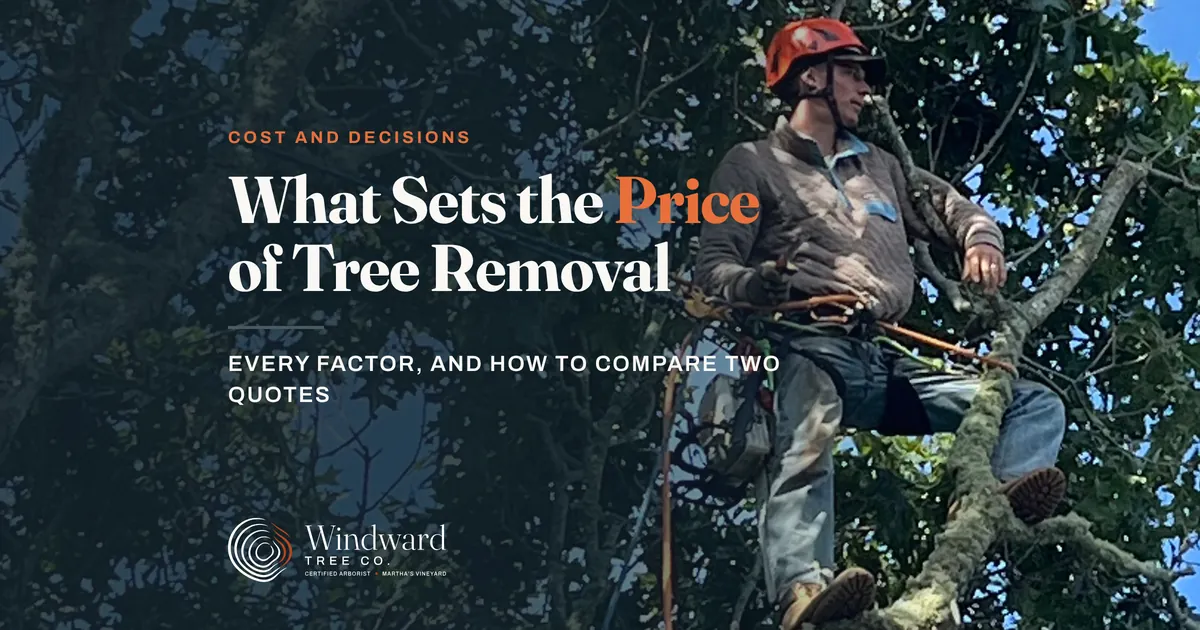
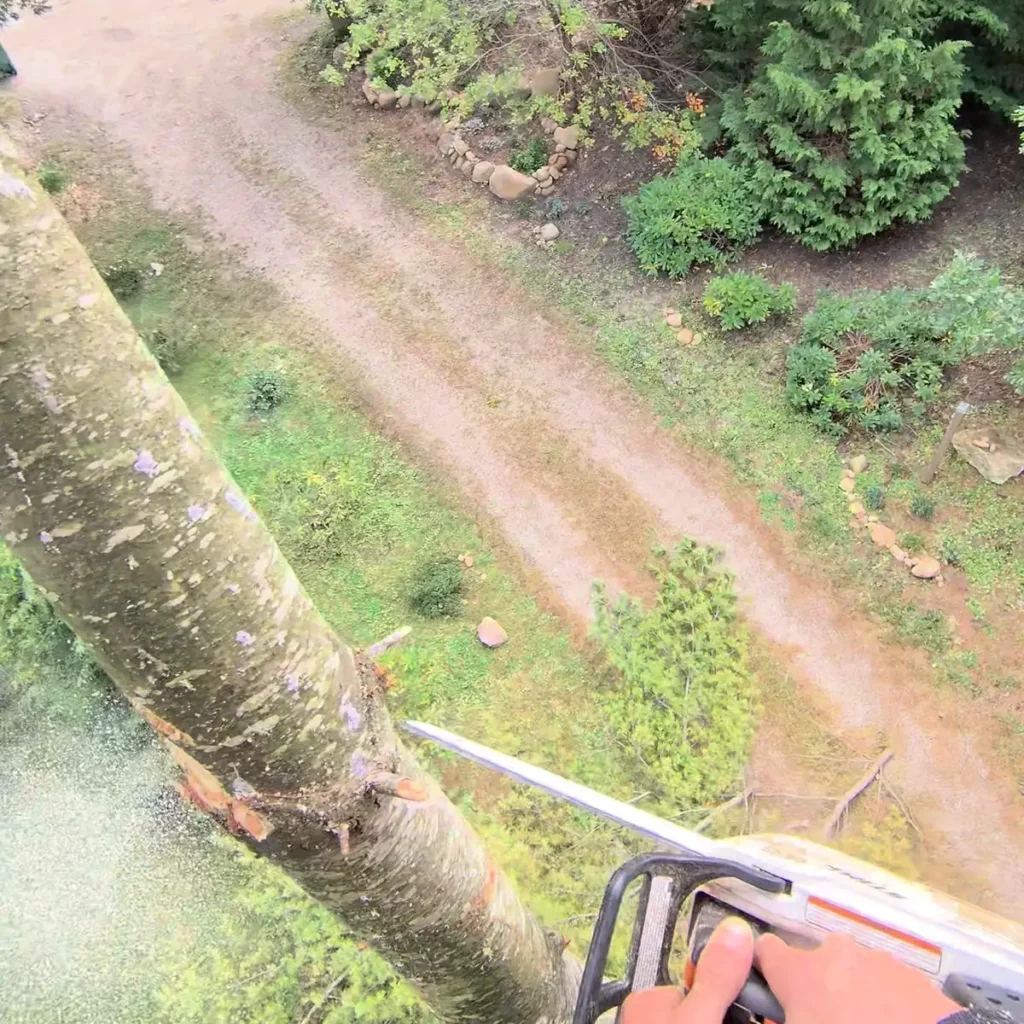
The biggest single factor is usually what sits under the tree. Felling a tree into open ground is fast. Taking the same tree down over a roof means climbing it, tying off each limb and lowering it with ropes. That’s the rigged method used for our hazardous tree removal work.
Why Does Tree Removal Cost More on the Island?
Island jobs carry costs a mainland company never sees. They include ferry logistics for equipment and parts, tight roads and long private drives, brush disposal charged by weight, and conservation rules that can require a filing before a single tree comes down near water.
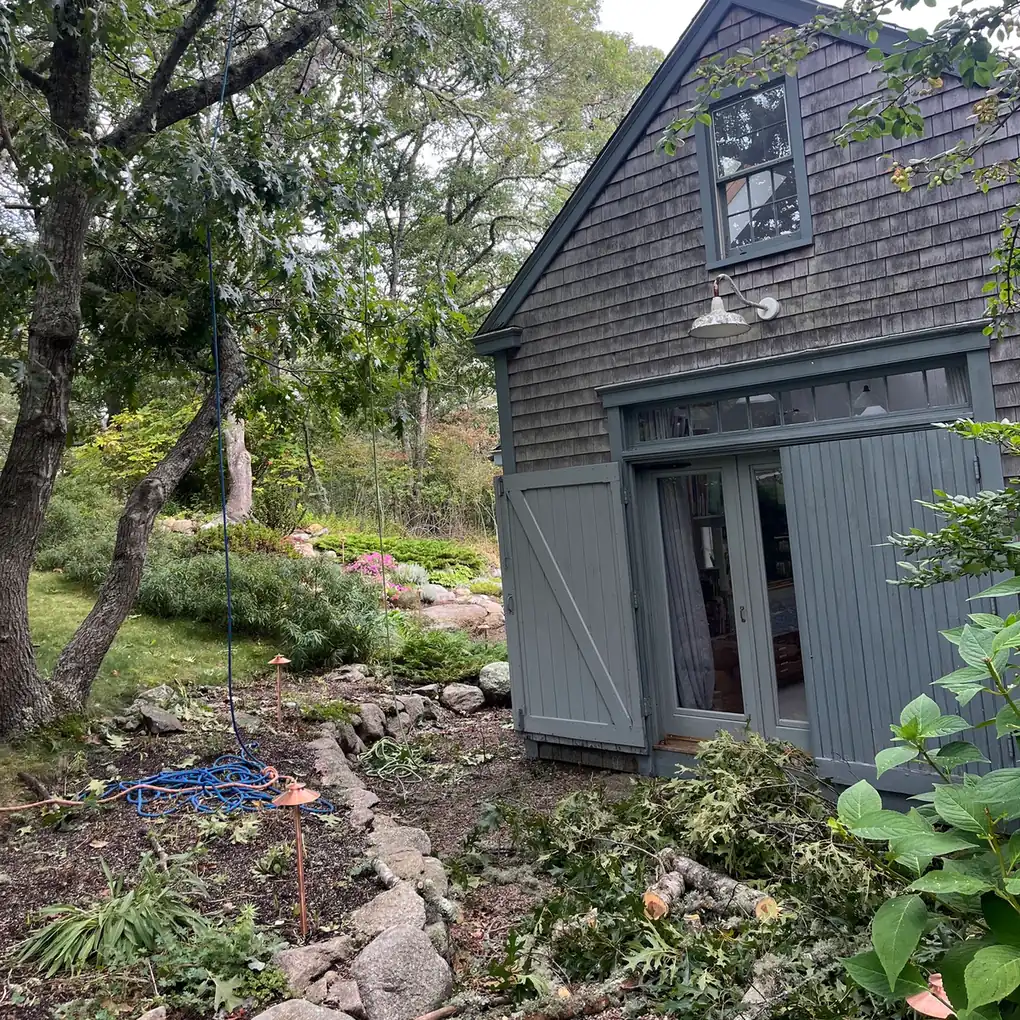
Access. Many properties sit at the end of long sand or shell drives, and some bluff lots have no truck access at all. On an up-island property, like much of our Chilmark tree service work, wood may have to be carried or winched out by hand.
Disposal. Brush can’t just go to a mainland yard down the street. The Martha’s Vineyard Refuse District price list charges for brush by the ton, so a big pine adds real weight to a disposal bill.
Wetlands and conservation. Massachusetts rules say that work within 100 feet of a wetland should start with a call to the conservation commission, and the law covers vegetation removal. Island towns take this seriously. In 2025 the Edgartown Conservation Commission fined a Katama Bay owner after cedars were cut in a wetlands buffer, with daily penalties until a restoration plan was filed.
A good quote tells you whether a filing is needed before the work, and who is handling it.
Stump Grinding: Included or Separate
Stump grinding is almost always priced as its own line. Some owners want the stump gone; others are happy to leave it low in a wooded corner.
Grinding depth varies a lot. Illinois Extension notes that stumps can be ground anywhere from flush with the soil to more than a foot deep. It recommends hauling away the grindings and filling the hole with topsoil if you plan to replant, because wood mixed into soil ties up nitrogen as it breaks down.
That’s why the quote should say three things: how deep, whether the grindings are raked out or hauled away, and whether the hole is filled. For lawn areas, our friends from Estate Care can lay new turf over the patch with its sod installation service once the stump is gone.
Why Do Dead and Storm-Damaged Trees Cost More to Remove?
Dead, decayed and storm-damaged trees are harder to climb and less predictable when cut. Climbing may not be safe, so the work can call for a lift, smaller rigged pieces and a slower pace. All of that takes longer than the same job on a healthy tree.
OSHA’s guidance for inspectors says crews must check the health of the tree before starting and that climbing decayed or damaged trees could be hazardous. On the Vineyard, pitch pine killed by the southern pine beetle is the most common example we see right now.
Timing adds to this. A tree on a roof after a nor’easter has to come off that day, often in wind and rain. Our guide to storm damaged trees covers what to do while you wait for the crew. Taking a dead tree down on a calm day in November almost always costs less than removing it from the house in February.
How Do You Compare Two Tree Removal Quotes?
Put them side by side and check that each covers the same work: insurance, the removal method, cleanup, what happens to the wood, the stump, and any permit filing. The lower quote often leaves one of those out.
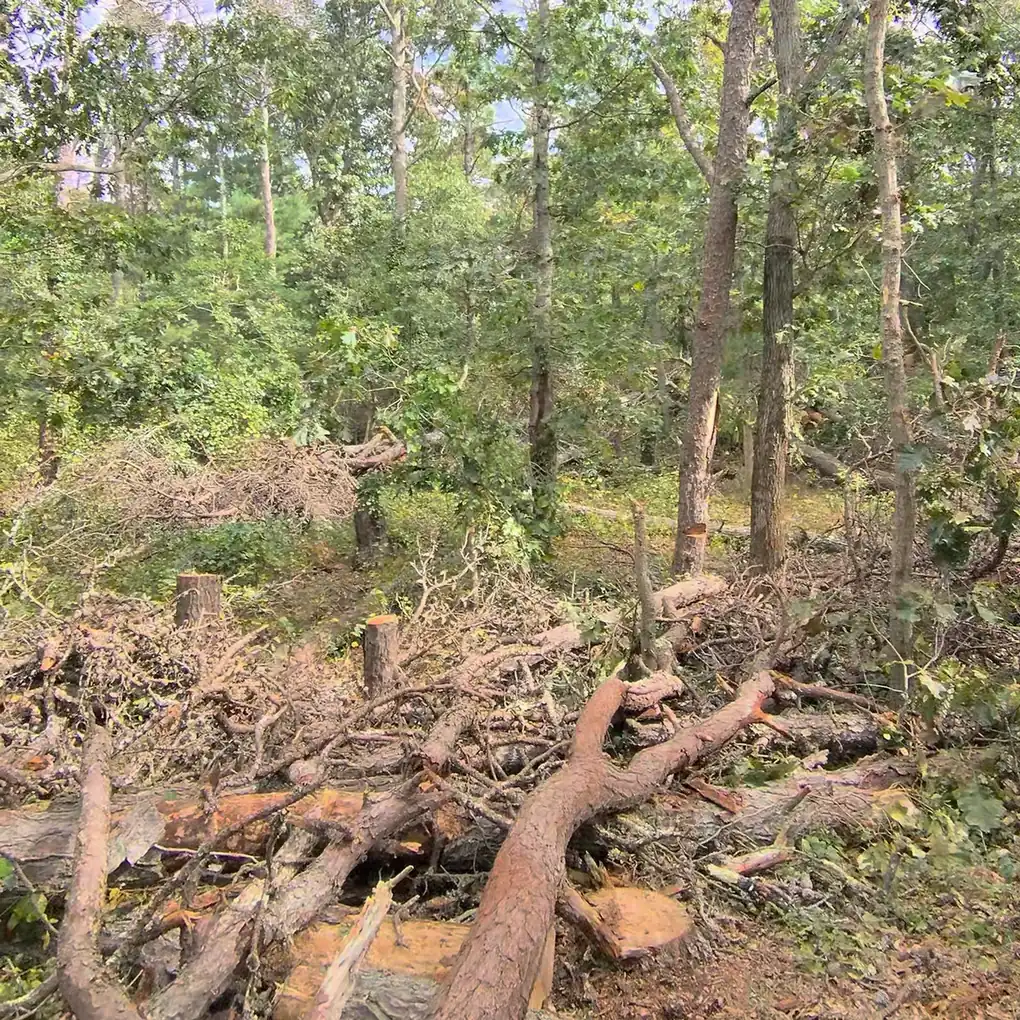
The International Society of Arboriculture’s advice on hiring an arborist is short and worth following. Ask for proof of insurance and call the insurer, get more than one estimate, be wary of door-to-door bargains, and get the job in writing.
Use this checklist on every quote:
- Insurance. Proof of liability and workers’ compensation coverage, confirmed with the insurer.
- Credentials. An ISA Certified Arborist on the job, not just on the website.
- Method. Felled, rigged or lifted, and how the house and gardens are protected.
- Cleanup. Brush chipped and removed, lawn raked, no ruts left behind.
- Wood. Hauled away, left in rounds, or cut to stove length and stacked.
- Stump. Ground or left, how deep, and whether the grindings are hauled away.
- Permits. Whether a conservation filing is needed and who submits it.
Work around wires is its own category. OSHA lists electrocution, falling branches and chipper accidents among the main tree care hazards, which is why insurance is the first line on the list.
When Removal Isn’t the Answer
Some trees that get quoted for removal don’t need to come down. A tree with one weak union can often be cabled. A crown that overhangs the roof can be reduced. A declining tree may need a diagnosis first.
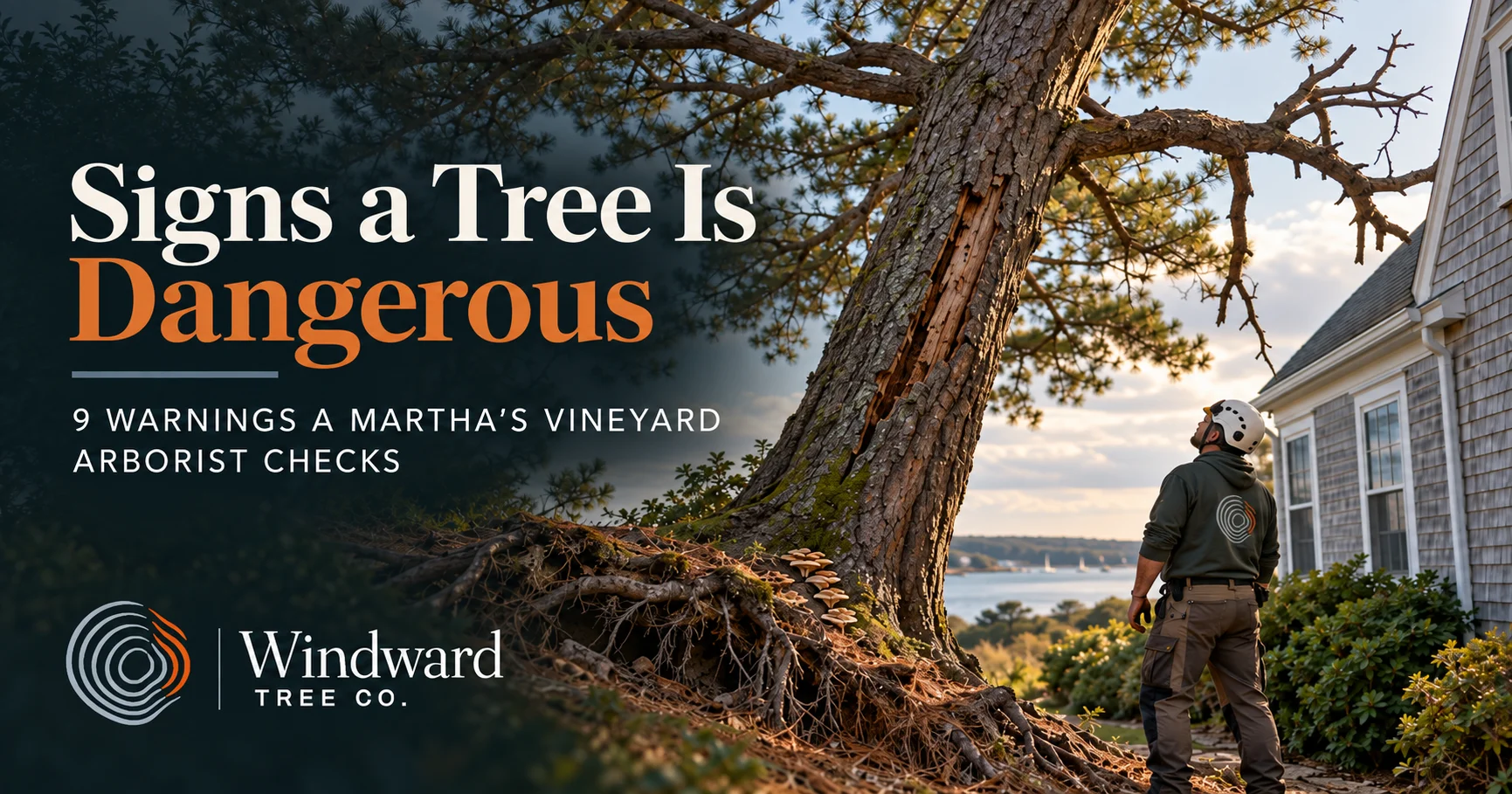
Before any removal, our arborists check whether pruning or cabling would solve the problem for less. If the tree is sound, we’ll say so. For the warnings that do point to removal, our list of signs a tree is dangerous walks through them in the order we check.
Request a free estimate to get a real number for your tree, even from off-island: we arrange access with your caretaker and send photos with the quote. For a tree already on a house or across a road, call (508) 560-6073.
Frequently Asked Questions
What time of year is best to remove a tree?
Late fall and winter suit most planned removals. With the leaves off, the crew sees the structure clearly and the crown is lighter, and lawns and beds are dormant, so less gets damaged. Hazardous trees are the exception: they should come down as soon as they’re found.
Can you quote a tree removal from photos?
Photos help us plan, but they rarely show what sits under the tree, how the drive handles a truck or where the rot is. That’s why we quote on site, and the visit is free even if you can’t be there.
Does homeowners insurance cover tree removal?
Usually only when the tree falls on a covered structure. Consumer Reports explains that when a fallen tree damages no structure, removal is normally the owner’s cost. A healthy tree you choose to remove is not an insurance matter at all.
Can I keep the wood from my tree?
Yes, just tell us before the job and we’ll leave it in rounds or cut it to stove length and stack it where you want. Keeping the wood usually lowers the disposal part of the quote.
Is it cheaper to grind a stump or dig it out?
Grinding is almost always the cheaper and tidier choice. Digging a stump out tears up a wide circle of roots and soil and needs heavier equipment. We only recommend full extraction when something has to be built in that exact spot.